This article was originally published in NATE’s (National Association for the Teaching of English) publication Teaching English: Issue 29.
Teaching meaningful analysis of whole-text structure
Students often find analysis of narrative structure difficult but a range of techniques can be used to make it both accessible and enjoyable.
Noticing narrative structure
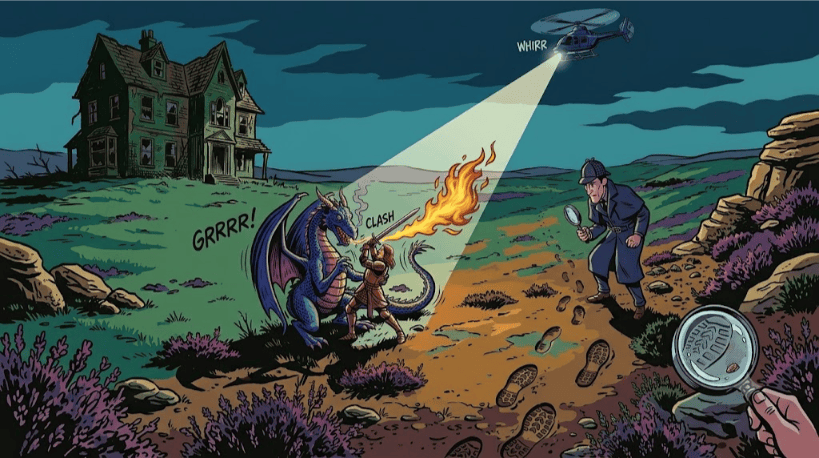
There is a moment in Chapter 19 of The Murder of Roger Ackroyd by Agatha Christie when doubt is cast into the mind of the reader about the innocence of Flora Ackroyd. As the last character to have seen the victim alive, we now learn (much to our surprise) that she had also stolen money from him in the hours before his death. The evidence, it seems, is conclusive and points firmly towards one character.
Nevertheless, when discussing this moment in the story recently, we agreed that it was surely a red herring, given that Flora was the very character who, in Chapter 7, had implored Hercule Poirot to come out of retirement in order to investigate the murder of her uncle and exonerate her fiancé. Certainly, a character who declared ‘I’ve got to persuade him’ would not invite a master detective to uncover her murderous deed. And, with a quarter of the novel still remaining, it seemed just as improbable that Christie would offer us a culprit and the motive so neatly, unless it was to misdirect our attempts at amateur sleuthing.
While these musings were prompted by a summer holiday read, they are more significant in what they reveal about the habits of the reader than what they suggest about Flora Ackroyd’s guilt. If we were to reflect upon the conversations we have about books with others, we may find that, much like the one above, many of them tend to focus upon structure: our satisfaction with opening and endings, unexpected plot twists that we predicted and those that we didn’t, our changing perceptions and even tolerances of characters and their decisions, our stamina for the story as a whole. This, it could be argued, is an organic response to a narrative (be it a novel, a film or a picture book). As readers, we track narrative progress back and forth and re-evaluate what we know throughout our time with a story.
Teachers will also recognise these conversations as ones we have with our students: To what extent is Lady Macbeth’s suffering in Act 5 Scene 1 enough for us to forgive her earlier cruelties? What might Gerald Croft’s elusive behaviour last summer foreshadow about his engagement to Sheila Birling? How does the pace with which small-town life is depicted in “The Lottery’ make the conclusion of the story all the more horrifying?
And yet, despite the richness of these discussions, we may not always find them reflected as confidently in students’ written analysis of narrative structure as, perhaps, their analysis of language.
Language v. structure – a necessary rivalry?
Indeed, analysing structure can often be overlooked in favour of the more familiar and comforting analysis of language. Since the latter is rooted in words, it provides students with something tangible upon which to hang their exploration of the text, offering a sense of familiarity (and security). In contrast, commenting on structure can feel more elusive, less concrete. It requires ‘zooming out’ on a number of events instead of ‘zooming in’ on individual words or phrases.
In response to this challenge, students can tend to apply the same approach to structural analysis that they would use for language. Firstly, this can result in vague remarks, such as how the writer has used paragraphs of different lengths ‘to make the writing more interesting’, or how he/she has employed short sentences ‘to build tension’, without any meaningful explanation of how this has been achieved.
Moreover, and perhaps even more confusingly, it can lead students to mask their difficulty with the overuse of terminology. Teachers may then be faced with comments such as ‘an isocolon has been used to make the writing more interesting’ or ‘the writer uses anadiplosis to emphasise their point’. Such a methodology undoubtedly attempts to take the ‘bigness’ of the text and compress it into a more manageable unit.
However, focusing on structure at word and sentence level in this way essentially risks overlooking the significance of whole-text structure. Of course, terminology, when relevant and appropriate, can be a springboard for an insightful analysis of how writers have sequenced a narrative, but when irrelevant, it can quickly become jargon.
The problem with structure …
These observations are echoed in AQA’s English Language Insight Report for June 2019, which lists Question 3 (analysis of structure) as an aspect where ‘students did less well’, stating that ‘a significant number of students continue to make over-generalised comments (‘interests the reader’, ‘makes the reader want to read on’) which do not show any understanding of the effect(s) of a particular structural feature and cannot be credited at Level 1′.
Similarly, the AQA GCSE English Literature examiner’s report from 2019 identifies that the ‘overuse, misuse and inappropriate use of subject terminology continues to be the biggest issue seen in responses as this seldom helps students to illustrate their own thinking about the texts’. More promisingly, however, the report concludes that, in the best examples, terminology related to structure is less common, therefore ‘students are able to discuss structure with clarity and fluency, using simple terminology such as ‘at the start/this changes when/in contrast…’.
This final assertion seems particularly pertinent. The challenge of analysing structure can lead some learners to view it hierarchically either as the reserve of students aiming for the very top grades, or as not really a significant enough feature to warrant analysis, when compared to language. However, as this reflection in the AQA report demonstrates, the analysis of structure is far more accessible than it may sometimes be perceived. It need not be the reserve of the most able nor should it be regarded as secondary to language.
Strategies for structure
How can we, then, make structural analysis an integral part of the reading process in the English classroom, and thus accessible to all? How do we enable students to take the discussions described above and turn them into in-depth written explorations of narrative structure?
We have found the following strategies to be the most rigorous, informative and enjoyable in tackling these questions.
1. ‘The Story of an Hour’: using short stories to highlight structure
Short stories lend themselves particularly well to the teaching of structure because they provide a compact whole from which students can step back and consider structural movements, without worrying that they cannot remember the narrative. Working with texts which feature fewer characters, settings and events (when compared with whole novels and plays) scaffolds the exploration of structure by removing some of the narrative ‘clutter’ that can make analysis especially challenging for reluctant readers.
Furthermore, a ‘little and often’ approach, made possible by stories that can be read in a single lesson, gives students repeated opportunities to track shifts in different narratives, thereby honing their ability to identify and explain how writers exploit structure effectively.
With such a wealth of narratives to choose from, short stories also offer the flexibility for teachers to incorporate an increasingly diverse range of texts, in terms of both genres and writers – the latter being a particular priority as many English departments strive to develop more inclusive curricula. An exploration of how writers use the impending threat of violence to build tension could feature the popular tale ‘The Landlady’ by Roald Dahl, but also include ‘The Dogs’ by Hanif Kureishi, ‘The Lemon Orchard’ by Alex La Guma, ‘Lather and Nothing Else’ by Hernando Tellez or the aforementioned ‘The Lottery’ by Shirley Jackson. Though vastly different in terms of content, these stories share a common thread in the way they use foreshadowing to build menace.
2. Using the familiar: dealing with linear structures…
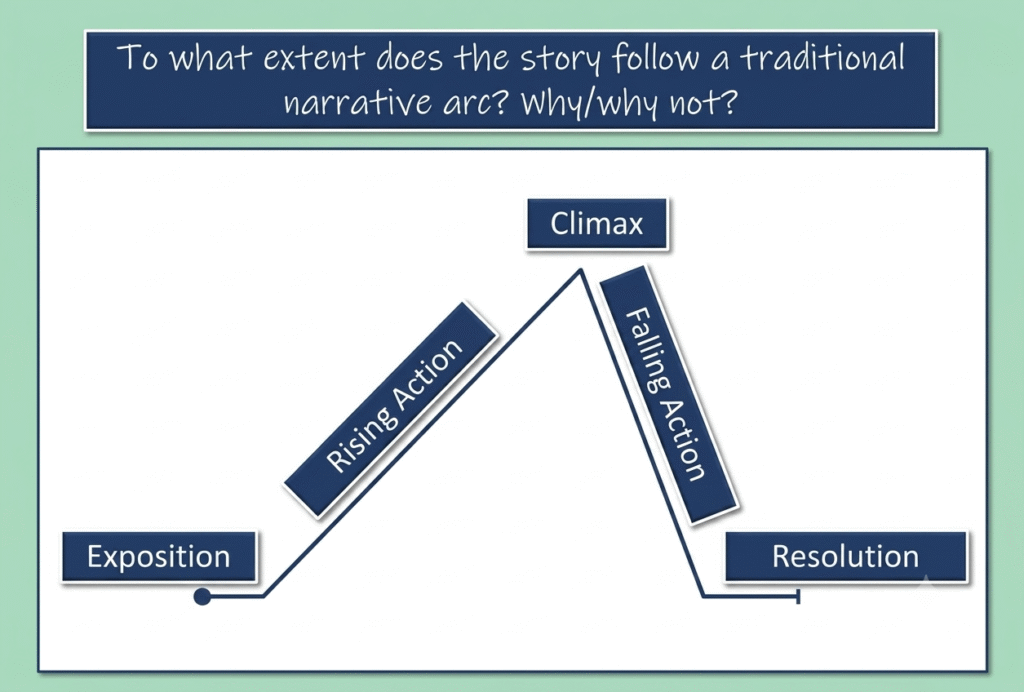
If we want our students to think deeply and confidently about different narrative structures, we should begin with story shapes that are familiar, such as the chronological tale. Since students ‘learn new ideas by reference to ideas they already know’, the explicit teaching of chronological storytelling enables teachers to activate and review existing knowledge, while also serving as a starting point for more complex structures (Deans for Impact, 2015).
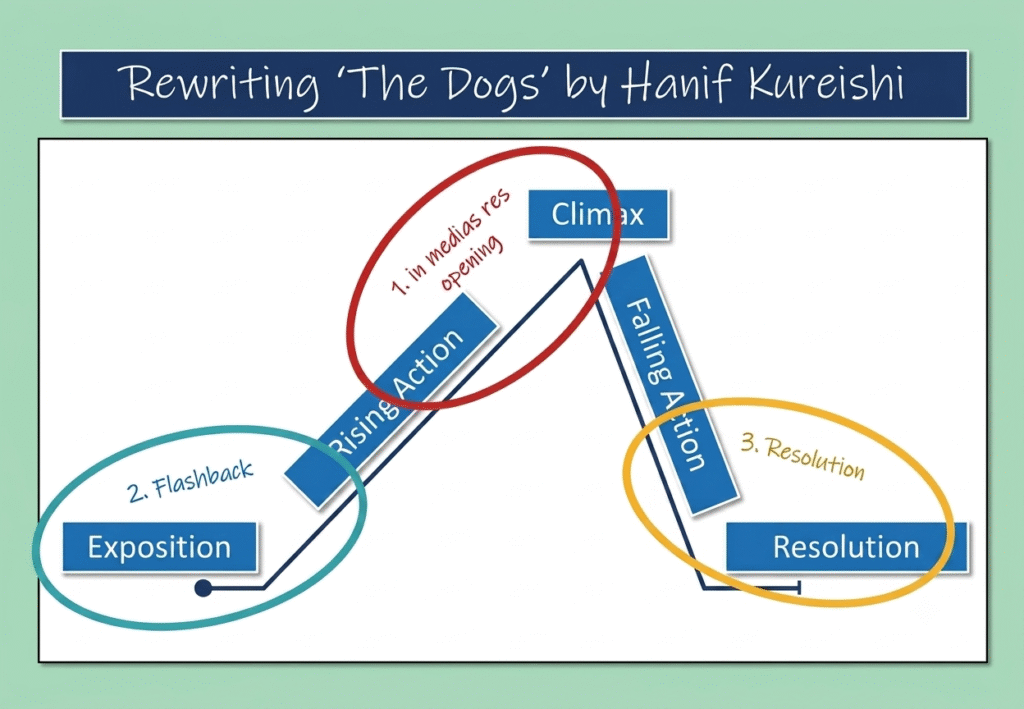
Terminology, such as Freytag’s Pyramid, with its exposition (and inciting incident), climax and resolution, is an essential stepping stone and, crucially, provides a lens through which to view the whole text, rather than gripping tenuously to sentence and paragraph length.
Teachers can role-model the use of such terminology by posing the very questions we want our students to ask: How does Roald Dahl present Mary Maloney as such a benign character in the opening of ‘Lamb to the Slaughter’? Why does this enhance the shock of her lamb-wielding climactic moment? In doing so, we create contexts where students are guided to analyse the function and impact of different narrative moments, equipped with the vocabulary that will allow them to do so clearly and confidently. They can then begin to explore why some writers choose to deviate from this chronology.
3. … to introduce the less familiar: dealing with non-linear structures
Here, then, is an opportunity to consider structures that place greater demands on readers by challenging their notion of time and movement through non-linear storytelling. Flashback, in medias res, cyclical narratives, cliffhangers, and foreshadowing all require the ‘back-and-forth’ reading to which we alluded earlier.
Take ‘The Veldt’ by Ray Bradbury: readers collect clues throughout the narrative, not fully understanding their significance, until they have reached the end and actively revisited the trail that was created all along. In this narrative, the in medias res opening (instead of a traditional exposition), sets the uneasy mood. It is then enhanced through careful foreshadowing with unsettling motifs that lead to a gruesome climax. Finally, the cyclical structure confirms the sinister suspicion introduced at the very beginning.
Ultimately, the teaching and revisiting of this reading process is intended to give students scope to trace and anticipate structural patterns across the different texts they encounter, including the recurring use of particular structural elements within certain genres. Learners who have become adept at this process of analysing structure can be challenged to consider why Gothic writers exploit the cliffhanger ending in a broad range of narratives such as, ‘The Tell-Tale Heart’ by Edgar Allan Poe, ‘The Tower’ by Marghanita Laski, and ‘The Monkey’s Paw’ by W. W. Jacobs.
Similarly, they could also consider the purpose and impact of in medias res in dystopian stories such as Henry Slesar’s ‘Examination Day’, Ray Bradbury’s ‘A Sound of Thunder’, and Kurt Vonnegut’s ‘Harrison Bergeron’. In this way, students are guided to review and extend their prior knowledge in order to master new ideas, thus developing habits that will serve them in both their personal reading and within an exam setting (Deans for Impact, 2015).
4. Replacing PEE with ‘What? How? Why?’
It could be tempting – knowing that students will eventually have to analyse structure in their exams – to assess their new knowledge and understanding through the repetition of exam-style responses. However, as Daisy Christodoulou asserts: ‘We cannot rely on just […] one style of assessment for all the assessment information we need’ (Christodoulou, 2016). This is not to suggest that exam-style responses are without value. Certainly, we do eventually need to guide learners towards a process for producing a written analysis of structure, but even deciding on a specific methodology for doing so requires some careful teacher reflection.
Popular structures such as PEE and its many metamorphoses (such as PEA, PETER, PEAL and SEAL) risk directing them towards the very pitfalls of ‘zoom-in’ analysis that we are encouraging them to avoid. The inherent ambiguity of such scaffolds can cause students to latch onto word-level quotations and terminology when a much broader perspective is necessary. After all, how many students could explain what a ‘point’ is? What is ‘evidence’ when analysing structure? Does it count as ‘evidence’ if it is not a direct quotation? What exactly is an ‘explanation’ or an ‘analysis’? What precisely are we explaining?
When providing students with writing frames such as this, one that is question-based perhaps offers a far more secure scaffold because it lays the stepping-stones for deep thinking. A ‘What, How, Why’ method based on the questions What is the writer trying to show us? How do they do this? Why is the writer showing us this now? mimics the very questions that we, as teachers, ask when reading a story with our students to help them recognise the text as a deliberate construct. A writing frame that uses these questions as its foundation creates space for students to begin asking those same pointed questions independently, while also removing ambiguous terms such as Point, Evidence and Explanation.
5. A Text Rewrite
Nevertheless, as Daisy Christodoulou suggests, exclusively planning for outcomes that mirror summative exams does not provide teachers with full insight into students’ knowledge and understanding. ‘Taking a complex skill’, she proposes, involves ‘breaking it into its smallest parts and teaching those small parts. This results in lessons and activities that look very different to the activities on the final exam paper’ (Christodoulou, 2016).
We know that repeatedly planning for exam-style analysis risks framing the value of learning in the context of ‘exam-readiness’. However, Christodoulou’s assertion prompts us to also question how useful and informative such an approach really is – both in teaching a new skill and in assessing students’ understanding.
Another way to break the skill of structural analysis into its smaller parts, giving students a full and nuanced understanding of how structure might be exploited for narrative impact, is by devising opportunities for them to become writers. In this way, they can explore the choices available to storytellers in creative ways, using methods which are no less analytical, but perhaps more informative. Asking students to make deliberate choices about whole-text structure is a worthwhile but demanding task, especially when they may be used to the chronology of a traditional narrative arc. Teachers can scaffold the process of them becoming writers who experiment with structure by first guiding them to manipulate – to re-write – the trajectory of narratives they have already read.
One way to teach a ‘text re-write’ is by asking students to reorganise the order in which events are revealed in a chronological tale. Take the shocking story ‘The Dogs’ by Hanif Kureishi. Students create a storyboard in which they re-sequence the narrative: they could decide to begin with the rising action, climax or even the resolution, and then use a flashback to reveal the bizarre and tragic events that led up to this moment. This reimagining of the tale evokes several analytical questions for them to reflect upon: To what extent is this the same narrative? How have our feelings towards the events and characters changed? Why is that?
A further way to teach a text-rewrite is by asking students to add a narrative moment, such as a flashback or a flashforward, which is not part of the original story. This then prompts different analytical questions, particularly regarding the link between narrative structure and characterisation.
For example, would we feel differently about Roald Dahl’s villainous landlady if a flashback confirmed that she had indeed lost a son in the war, as Billy Weaver suspects? When should such a flashback be shared with the reader? How would this alter its effect? What if a flash-forward revealed immediate feelings of remorse and regret following another murderous deed? Would this further dimension to her character make her more or less sinister?
This conscious manipulation of narrative structure emphasises the malleability of storytelling and promotes hard, analytical thinking about the impact of the decisions made by a writer. At the same time, the text rewrite method takes away responsibility for constructing a whole new story and essentially reduces cognitive load, while still giving students autonomy over making structural choices.
6. Deliberate construction
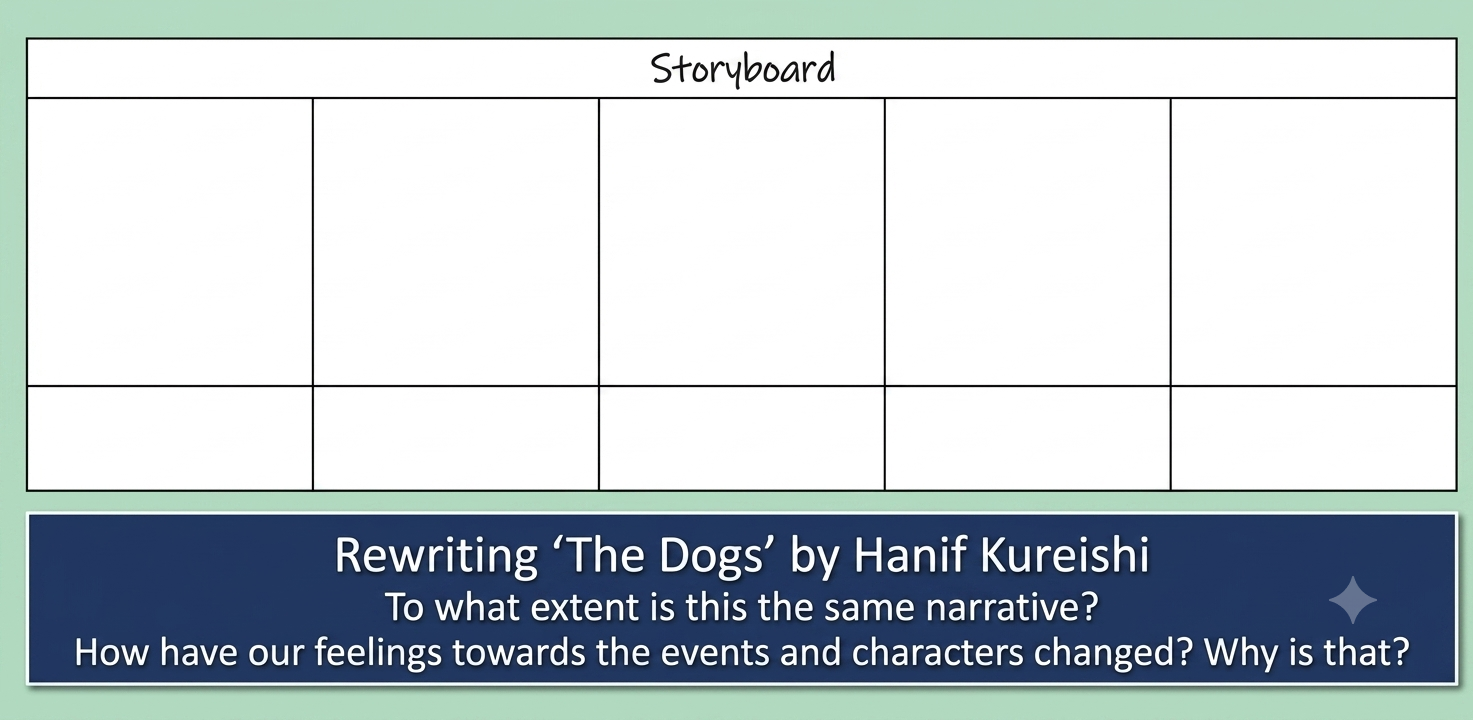
If meaningful analysis of structure requires ‘zooming out’ from the text, the process of creating a new narrative which makes purposeful use of structure should also begin with an overview approach that recognises the impact of different sequencing decisions. A simple but informative way to do this would be to offer students a number of narrative events which could feature in the opening of a story without indicating a predetermined order.
Here, it would also be useful to begin by explicitly identifying and discussing the text’s genre, purpose and audience. For example, a reader of the mystery genre will look to the opening pages of a story for a tense and foreboding atmosphere, an impending threat, and a series of unanswered questions.
Having established these expectations, students could then be asked to order the narrative events to achieve the desired outcome. For example, how might we sequence the following list of narrative events in an order that most successfully meets the reader’s requirements of a mystery?
- A local radio station reports that all access roads have been closed
- Eight strangers arrive at a stately home at the same time
- A letter is hand delivered but it is not signed, and the person delivering it is not seen
- Darkness descends as the day approaches evening
A dense fog consumes a large stately home
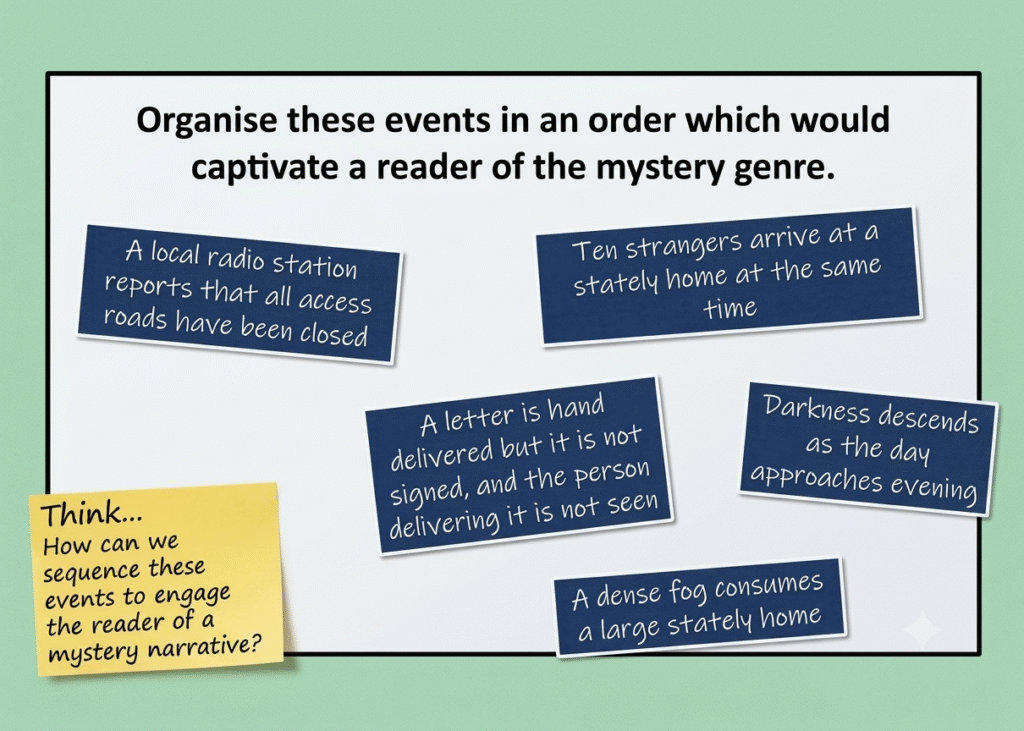
Inviting students to share their decisions creates a forum for rich, evaluative discussion where they can explore different ways in which a reader’s expectations can be met. Many students may favour a traditional exposition in which ‘a dense fog consumes a large stately home’, followed by the arrival of eight strangers, because these are the most obvious signposts of a mystery narrative. However, others may convincingly argue that a radio report about road closures or the hand delivery of an unsigned letter is more effective in creating an atmosphere of uncertainty.
Following such discussion, students can be guided to write the narrative based on the choices they have made. This process can then be rounded off with them sharing their stories with each other and using comparative judgement to give focused feedback on the different versions of the tale that have been created.
Beyond ‘Reading On’
These strategies are intended to take the fear (and perhaps the indifference) out of structural analysis. By involving students in the reading and writing of texts that make deliberate, conscious and crafted choices about narrative structure, we foster a greater appreciation of an aspect of storytelling that is sometimes so subtle it can be overlooked. After all, understanding the art with which a narrative has been assembled is an important skill that shapes students’ experiences of all stories, be they written or illustrated on a page, viewed on a screen or heard in a song.
References
- AQA Education (2019) GCSE English Language Insight Report: 2019 results at a glance. Manchester: AQA
- AQA Education (2019) GCSE English Literature Insight Report: 2019 results at a glance. Manchester: AQA
- Deans for Impact (2015) The Science of Learning. Austin, TX: Deans for Impact.
- Christodoulou, Daisy (2016) Making Good Progress? Oxford: Oxford University Press